
There are decisions that are made with an agitated mind and a beating heart. Mine began in Cuba, in the middle of the Latin American Congress of Botany. I wasn’t sure if I would reapply to the legendary OTS Plant Systematics course. I had already been rejected once, and the fear of “No” is always uncomfortable. But something inside me – that “cursoholic” impulse that pushes me to seek new experiences – told me: try again. I knew Álvaro Idárraga, one of the teachers, and I knew of other people who had gone through the course as students and spoke of it as a transformative experience. So, between lectures and posters in Havana, I wrote my letter of intent and asked for the necessary recommendations.
When I returned to Colombia, I immersed myself in the work and even forgot that I had applied. A month later, on any given day, I received an email: “Congratulations, you have been accepted!” I read it over and over again, incredulous. I had 20 days to confirm and send signed documents. Ten years passed, and I was still in the dilemma, making mental calculations about work permits, expenses, and the semester I had to leave unfinished. Then, I called a friend, Jairo Pinto, a great advisor and botanist, who had taken the course 14 years earlier. When I told him, his reaction went through the phone: “You can’t miss it! That course marks you, you will remember me. If you have to sell empanadas, I’ll buy from you. Do what you have to do to go.” It was like listening to an old prophet. His words and genuine joy were the key. And, in a wink from the universe, the next day I got the exact amount of money I needed. I took it as a sign and confirmed without blinking.
Then began the race of procedures, permits, and juggling to get everything ready. On my birthday, I was on a plane to Bogotá to process the visa —yes, Colombians are asked for a visa for Costa Rica. I missed my flight, because I was late. I printed papers at the airport at skyrocketing prices, and I made a video call with my friends, who encouraged me not to give up. The next day, fortunately, the consulate stamped my passport. Each step seemed like a test of endurance, but the excitement of what was to come kept me afloat. Finally, the day arrived. At dawn, at the airport, the suitcase was badly arranged, and my heart was in my throat. In the boarding line, I heard: “Hi Jessica, are you going to Costa Rica too?” It was Andrey, a student at the National University of Colombia, whom I had met in Cuba. We celebrated meeting and knowing that we would do the course together and that we would share the flight. Upon landing, the first premonitory phrase came from some Ticos on the plane: “Costa Rica has more than 50% of its territory in forests. They’re going to love her.” They were right.
I remember the feeling when walking through the Juan Santamaría airport. The air felt different, maybe it was not the air but my bristly hairs. A sign welcomed me: “Pura vida mood activated,” and there I felt a leap in my heart. The adventure planned for weeks was becoming a reality. We stayed at the Irazú Hotel, a labyrinth of long corridors with a pool and a jacuzzi that would later be one of the favorite places.
Before check-in, we tried gallo pinto and pork rind empanadas; Costa Rican gastronomy was beginning to win me over. Little by little, other students arrived: Sofi, the Uruguayan; Juan, the Argentinian. In minutes, we were a diverse group, laughing at our different accents and drinking cocktails without asking ages or resumes, just sharing.
That night we met the rest of our classmates and Stephanie, the course assistant. The famous phrases began to emerge from the first moments. Dennis, an unforgettable Tico, gave us his famous “jueputa que rrrico” and an anthropological lesson on why “the priest’s bitch” was always so well fed.
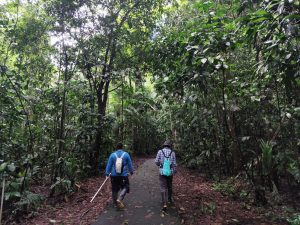
Between pizza and laughter, a bond was generated among the group. The next day marked the formal beginning: introductory talk at OET, choice of roles (me, proud head of the beer and custodian of the books) and trip to the first [research] station: Las Cruces. A premontane paradise in the south, with the beautiful Wilson House and its wooden windows that invite you to look at the infinite mountains. Every corner became the scene of anecdotes: laughter with flying rice, accidental headbutts with Sofi, and the certainty that we were experiencing something unique. Classes began at eight after a breakfast ritual that involved being barefoot. We walked “at a botanist’s pace” – ten meters in half an hour, while Álvaro and Mauricio taught us to see what is indispensable: Simple or compound leaves, alternate or opposite. Does it have latex? Does it have stipules? What family do we have here? There were those who seemed anointed by the sacred oil of taxonomy. Others sweated trying to recognize characters. In the evenings, we played Taboo or talked with Fernando Matos, the Brazilian teacher with the contagious smile who made us fall in love with samambaias, about the meaning of cafuné and saudade. Saudade, that anticipatory nostalgia that we already felt for the course that had not yet ended. The time in Las Cruces was perfect: delicious food, lively learning, friendships that took root little by little. Our first quiz shook us, some succeeded, and others doubted our calling, but the lessons, the farewell sangria, and the night walk to the bridge of the Java River trail made up for everything.
The next day, we returned to San José. We climbed Cerro de la Muerte, toured its cold wasteland, and said goodbye to Fernando on our last walk with him. We soon changed the field for a day at the University of Costa Rica Herbarium, working on our project and enjoying the tranquil atmosphere that only herbariums have. The night ended at Eric’s Copas, a bar famous among Costa Rican botanists, and the scene of a closing of the day as intense as it was joyful.
After our “chinchorros” night, we set off north toward Palo Verde in Guanacaste—a point on the map where the tropics dress themselves in dry forest and the air is saturated with an intense sun. The forest is deceptive: from afar it seems monochromatic, but once you step inside, a symphony of greens, yellows, and browns emerges, interwoven with bare branches waiting for the rain. Monkeys with acrobat tails watched us from above, and deer crossed the trails as if they were their personal runway.

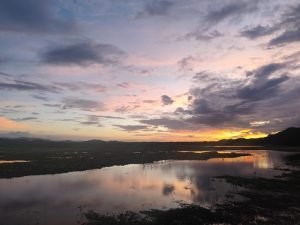
The dock became our special place—two hundred meters of wood and sky. At the end: the endless wetland horizon, Sofi, Juan, and me, mate in hand, legs hanging over the edge, photos like skydivers about to land in the clouds, days of terrible jokes, and golden sunsets that still make me smile.
The heat was brutal, and the mosquitoes diabolical. I bathed in jets of repellent, but it was of little use. In the forest, I was surrounded by buzzing clouds, and I came out with my clothes sprinkled with red dots. It was my blood stamped like a tropical Jackson Pollock. Even so, neither the heat nor the itching overshadowed the excitement of learning. We were warned about Crotalus, scorpions, and boas prowling around the classroom. Boots were our best friends, and checking the bed before sleeping, the new habit. The rooms were more rustic than in Las Cruces, and the floor was our meeting room. Between the laughter, the complaints about the heat, and the music, the anthem was born: “Qué calor” by Pibes Chorros. If someone complained about the heat, the chorus was automatic and collective. I never thought I would return to Colombia with cumbia villera on my playlist, but Palo Verde changes you in unsuspected ways.
The Palo Verde quiz, like the one in Las Cruces, was a mixture of nerves and resignation, with mosquitoes orbiting tirelessly. This time I felt more comfortable, my grade improved enough to feel that satisfaction that only those who have sweated the botanical shirt understand. On the last night, without an official farewell with the teachers, we put together our own party: Flor de Caña, with Coca Cola, improvised salsa, and that feeling that six days had been months… and yet we didn’t want to leave.
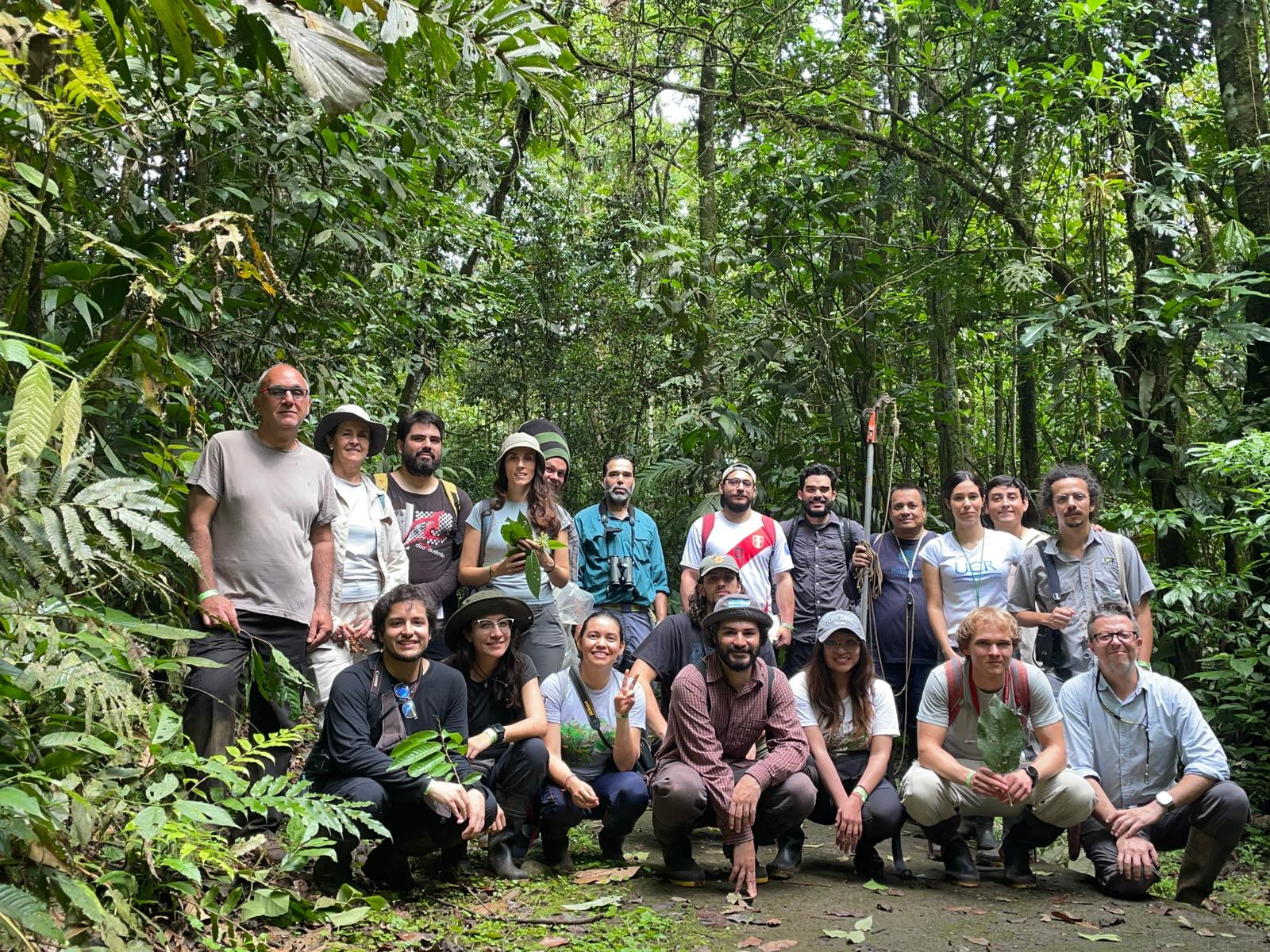
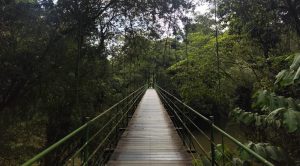
From Palo Verde, we departed directly to La Selva, in Heredia, with a stop at the mangrove swamp. We continued to feel like explorers of the nineteenth century, carrying books and magnifying glasses like Humboldt and Bonpland. We arrived when it was already dark. The night hid the exuberance of the season, but at dawn I understood why everyone spoke of this place as a natural temple. La Selva embraces its humidity and the song of its birds. It has trails that seem endless. The Puerto Viejo River looks imposing, and the sloths and otters appear as stars of a daily show that for them is nothing more than routine. The main bridge was my obsession: long, vibrant, with views that leave you speechless. Sometimes, I would make excuses to cross it again – “I’m going for coffee.” “I forgot my notebook.” – when in reality, I just wanted to feel that vibration under my feet and in my heart.
At La Selva, you could feel the comfort: comfortable lounges, a souvenir shop, air conditioning. But above all, it was the prelude to the end – the sadness hidden in each laugh, the accumulated fatigue, and the final projects that stole hours of sleep. We closed the talks with a great: Robbin Moran, a man who loves ferns and who showed us the human (and sometimes conceited) side of Linnaeus. Knowing that giants also have shadows makes them more real, more close. Our farewell tasted like beer, and the bar La Machaca witnessed our last collective laughter.
The last sunrise in La Selva was hot and bittersweet, the last group photo and a feeling of anticipated emptiness. San José was waiting for us with the farewell dinner, symbolic awards and an unplanned concert. Some of us continued on a trip to the Caribbean, to stretch the magic for a few more days on the beaches of Puerto Viejo, but the saudade had already settled. Back to the OTS office and the herbarium, days later with Dianita, was a lump in the throat. Of the thirteen people who took the course, only we were left, and the lonely corners that witnessed previous laughter tightened the knot more. I left Costa Rica with half a heart in my suitcase and half a heart scattered between Las Cruces, Palo Verde, La Selva, and every single person who accompanied me. I survived with that half heart for several days. Then, I understood that my friends were right: you come back stronger, clearer, more in love with plants, and with this half-monastic life of botanists. As Linnaeus said: “I don’t know whether to call ourselves sane or crazy because of our devotion to plants.” And, I think that’s where the beauty lies: in that mixture of madness and love that changes you forever.