
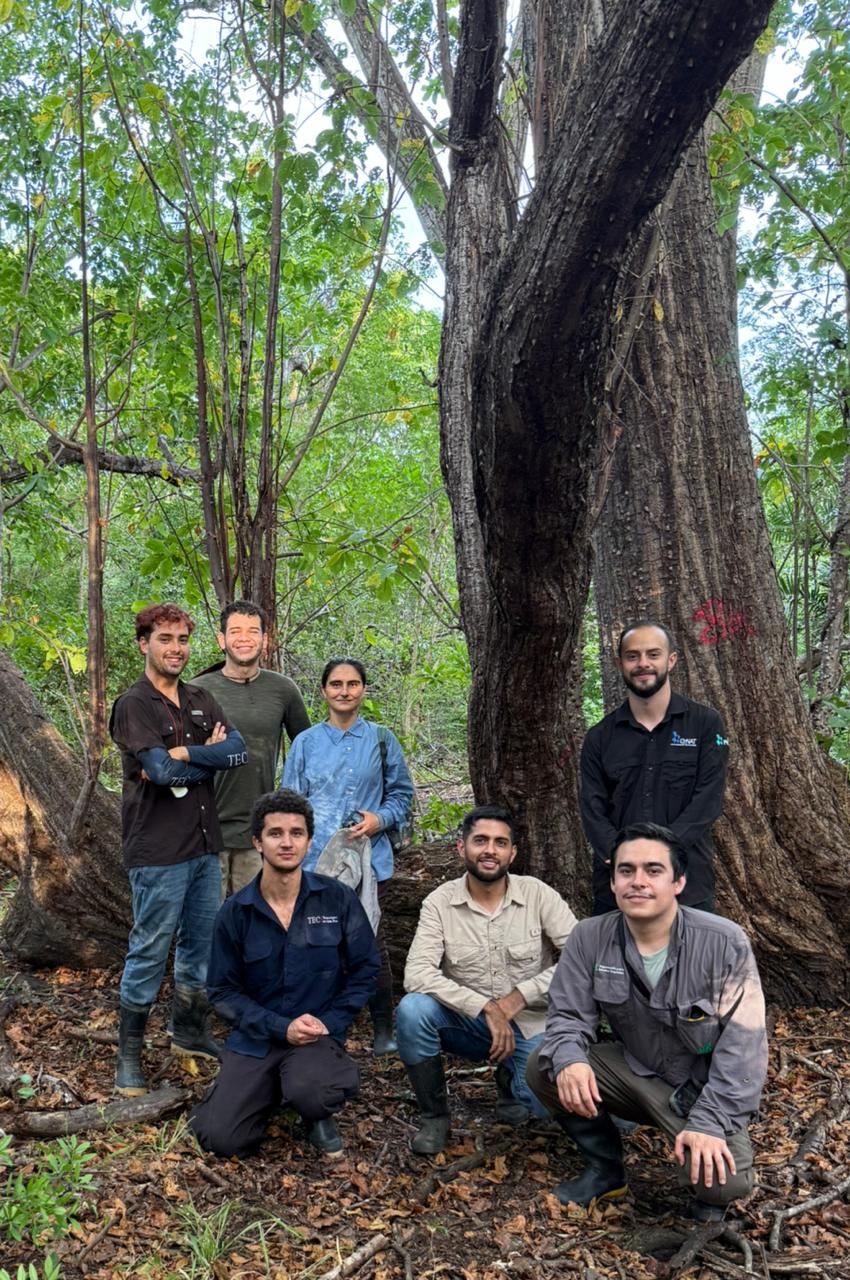
The recently published OCELOTS module, “Smartphone-based LiDAR”, is now available in both English and Spanish, opening the door for a wider community of students, educators, and researchers to explore how accessible technology can support tropical forest science.
The module was born from a collaboration between the Organization for Tropical Studies (OTS) and the Instituto Tecnológico de Costa Rica (TEC), within a broader research effort exploring the use of remote sensing tools to study tropical dry forest in Costa Rica. However, the heart of the module goes beyond the technology itself. It tells a story about how field experience, ecological questions, student learning, and digital tools can come together to create meaningful educational resources.
At the center of the module is a simple but powerful question: Can the LiDAR sensor of a smartphone help us better understand the trees that sustain tropical forests? Through this question, learners are introduced to point clouds, forest structure, tree measurements, and the potential of relatively accessible technologies for ecological research. Rather than presenting remote sensing as something distant or highly specialized, the module brings it closer to students through interactive activities, visual interpretation, and applied examples.
The tropical dry forest also plays a central role in this learning experience. As one of the most threatened and seasonally dynamic tropical ecosystems, it offers an important setting for understanding forest structure, conservation challenges, and the value of long-term ecological research. By using this ecosystem as a learning and research context, the module highlights not only the vulnerability of tropical dry forests, but also their importance as living classrooms.
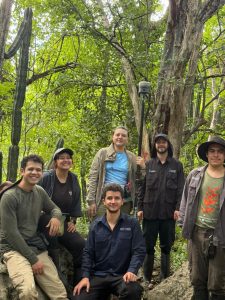
This work also reflects the value of interdisciplinary collaboration. The module brings together forest engineering, ecology, geospatial analysis, education, and science communication. TEC contributed technical and academic perspectives linked to forest measurement and remote sensing, while OTS provided the field-based context, educational mission, data experience, and connection to tropical research sites. Through OCELOTS, these combined efforts were transformed into an open educational resource that supports student-centered learning.
Behind the final module is also a human story: researchers, educators, and students working across institutions to translate field-based science into something others can use, explore, and adapt. It is a reminder that innovation in tropical forest education does not only come from new technologies, but from the people who find ways to connect those technologies with real ecological questions and meaningful learning experiences.
For OTS, this module is another example of its role in connecting research, education, and data. It shows how scientific work developed in Costa Rica can move beyond the field and become part of broader educational networks, helping tropical science reach new audiences in accessible, bilingual, and interactive ways.

For OTS, this module is another example of its role in connecting research, education, and data. It shows how scientific work developed in Costa Rica can move beyond the field and become part of broader educational networks, helping tropical science reach new audiences in accessible, bilingual, and interactive ways. The module is now available on the Gala platform in both English and Spanish, and we invite students, educators, researchers, and anyone interested in tropical forests and emerging technologies to explore how smartphone-based LiDAR can help us see forest structure in new ways: https://www.learngala.com/cases/smartphone-based-lidar