
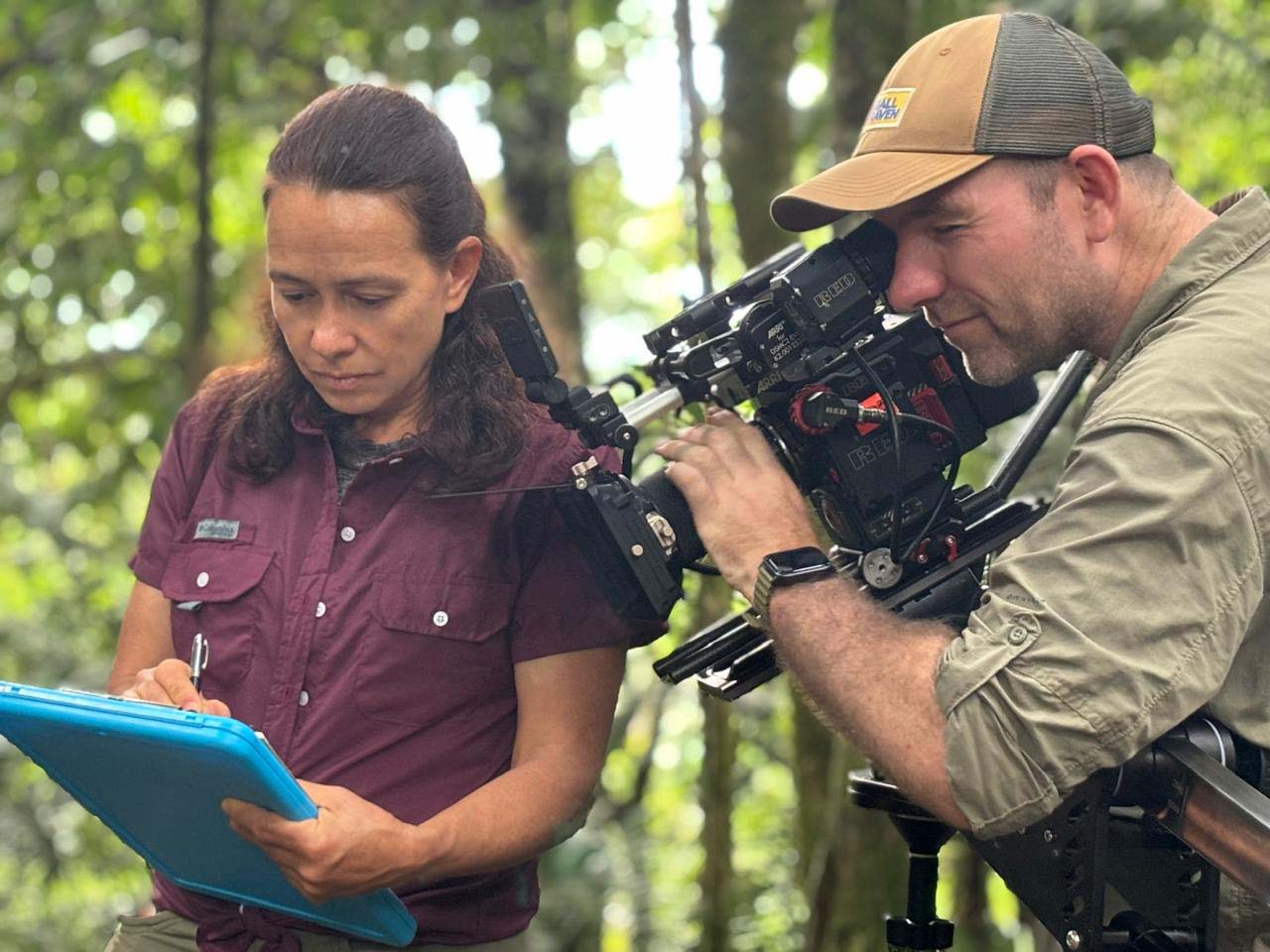
In our last newsletter, we shared the vision for the new Center for Tropical Restoration Science (CTRS), an initiative created to strengthen the connections between restoration science, field practice, and community needs across the tropics. Over the past few months, we have been laying the groundwork for this effort. Although the CTRS is still a young program, it is already developing strong foundations and collaborating with partners who share a deep commitment to restoring ecosystems and supporting the people who steward them.
Below, you will find an overview of the CTRS’s three initial objectives, each of which will continue to evolve as new collaborations take shape. We also invite you to complete a short survey and share your priorities for the types of resources and opportunities that would be most useful to you. Your input will help shape the direction of the program!
We would love your feedback on the most valuable aspects of the CTRS! Please take 3 minutes to fill out this survey (https://forms.gle/ZW4bTcvYRfWXKVr1A).
- Invest in capacity building and applied training for restoration actors
Effective restoration is aided by good information and access to the best tools and strategies. The CTRS aims to create accessible, applied training opportunities that support restoration practitioners and local environmental leadership.
Early efforts will focus on developing a model training program based at Las Cruces Field Station in collaboration with local partners, and over time, at other OTS station and organizations in the tropics. Planned activities include hands-on technical training for practitioners, field-based learning opportunities for students, and science-policy workshops for leaders working to integrate restoration into decision making. These programs will grow as we learn from participants and partners.
- Facilitate inclusive, high-quality knowledge exchange
Restoration is more effective when knowledge moves freely between practitioners, communities, policy makers, and researchers. One of the CTRS’s early priorities is to strengthen these exchanges by creating clear, practical communication pathways and opportunities for shared learning.
The Center will share accessible scientific information tailored to different audiences and languages, elevate practitioner experience through peer-to-peer exchanges, and support collaborative workshops and research. Over time, these efforts will expand into a broader suite of tools—such as multilingual guides, visual resources, and monitoring support—designed to support on-the-ground restoration practitioners.
- Generate applied knowledge to improve restoration and conservation outcomes
The CTRS aims to support applied, problem-focused research that directly informs restoration practice and policy. This includes expanding an existing network of restoration experiments in Costa Rica and across Latin America, while co-designing new research with restoration stakeholders.
In that spirit, we’d like to share some recent studies that highlighted innovations and well as practical approaches to scaling and assessing the outcomes of forest restoration efforts.
/Part%201/Canva%20Spread/Full%20Version%20Werden%20et%20al.%20Part%201.png?csf=1&web=1&e=khervS)
/Part%202/Canva%20Spread/Full%20Version%20Werden%20et%20al.%20Part%202.png?csf=1&web=1&e=4Gmq3X)
/Canva%20Spreads/Full%20Version%20Toro%20et%20al.%20Page%201-5.png?csf=1&web=1&e=qWehSq)