Program Overview
New genomic techniques and statistical analyses are crucial tools for the conservation geneticist. This 6-day course will provide an essential toolkit grounded in population genetics theory, coupled with basic and applied research examples from plants, animals, and microbes. It will provide a comprehensive overview of the essential background, concepts, and tools required to understand how genetics and genomics can be used to conserve species, reduce the threat of extinction and manage species of ecological or commercial importance.
The workshop will be based on Allendorf et al.’s Conservation and the Genomics of Populations (3rd edition, 2022). It will examine genetic and phenotypic variation in natural populations, the principles and mechanisms of evolutionary change, evolutionary response to anthropogenic change, and applications in conservation and management. A copy of the textbook will be included with tuition.
Our goals are to make sure the students
(1) Have a good understanding of the theory of
population genetics
(2) Are familiar with the most important current topics in conservation
genetics
(3) Are able to analyze genomic data for addressing crucial questions in
conservation.
Fred will be responsible for the basics of population genetics. Sally will cover several advanced
topics (e.g., quantitative genetics, landscape genomics, climate change, etc.). Marty will be
responsible for analyzing genomic data. We will form 5-student working groups that will analyze
representative data sets that we will make available. All of these analyses will be done using the
program R.
Topics
- Genomic variation in populations
- Hardy-Weinberg principle
- Genetic drift & effective population size
- Natural selection
- Mutation
- Gene flow & population structure
- Multiple loci
- Hybridization
- Inbreeding depression
- Units of conservation
- Demography and extinction
- Exploited populations
- Climate change
- Genetic monitoring
The shortcourse will also feature invited guest speakers who will present local case studies and a panel discussion on career paths in conservation genetics.
Additional background reading
Prerequisites
This intensive one-week course is designed for senior undergrad students and grad students in biology, veterinary sciences, ecology, taxonomy, public health, zoology, and related fields. It combines theoretical instruction with practical activities in the field and laboratory. We anticipate that students will be graduate students working in the area of conservation genetics.
Be familiar with R and RStudio
A tentative overview of our plan for the 6 days is shown below.
Day 1
Welcome and introductions
Each student will give a 5-minute introduction
Phenotypic variation in natural populations (Chap 2) [FWA]
Common garden experiments [SNA]
Chromosomal variation & pangenomes (Section 3.1) [FWA]
Genetic variation (Chap 3) [FWA]
Population genomics (Chap 4) [SNA]
Day 2
Hardy-Weinberg principle (Chap 5) [FWA]
Genetic drift (Chap 6) [FWA]
Effective population size (Chap 7) and the coalescent (Sections 7.8 & A10) [FWA]
We would like to spend this afternoon on a short field trip in the La Selva area. This will provide
the opportunity for the students and instructors to get to know each other in an informal setting.
Day 3
Natural selection and adaptation (Chap 8) [SNA]
Population subdivision (Chap 9) [FWA]
STRUCTURE software [FWA]
Multiple loci (Chap 10) [FWA]
We will spend this afternoon on the first session on data analyses. [MK]
Day 4
Follow-up on data analyses section [MK]
Quantitative genetics (Chap 11) [SNA]
Inbreeding (Chap 17) [FWA & MK]
We would like to spend this afternoon on a field trip.
Day 5
Hybridization (Chap 13) [FWA]
Landscape genetics (Chap 19) [SNA]
Units of conservation (Chap 20) [FWA & SNA]
Discuss progress on data analyses [MK]
Climate change (Chap 16) [SNA]
Demography and extinction (Chap 18) [FWA & MK]
Day 6
Presentation of data analyses groups
Conservation genetics in practice (Chap 24) [All]
General discussion
Sites Visited
La Selva Research Station
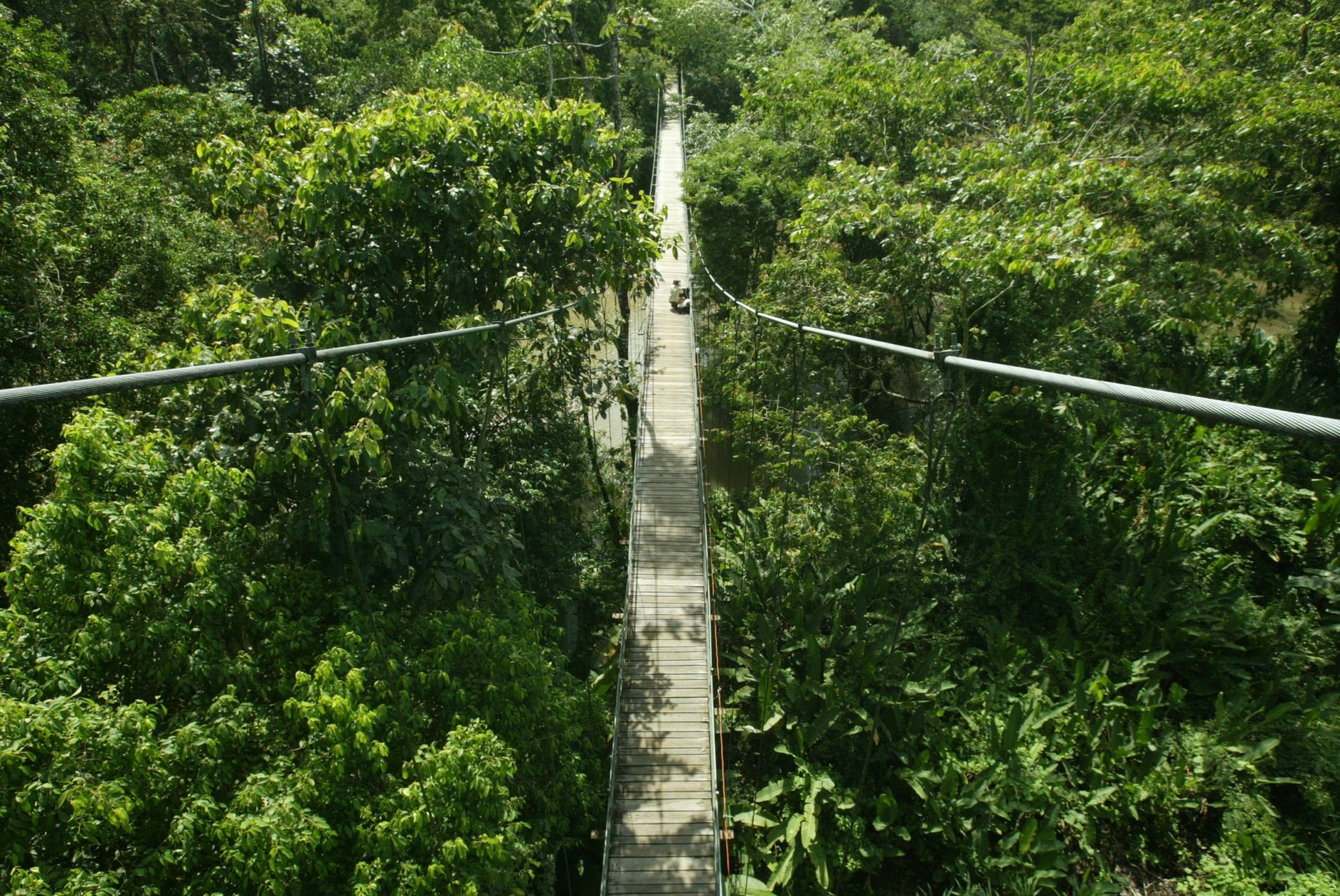
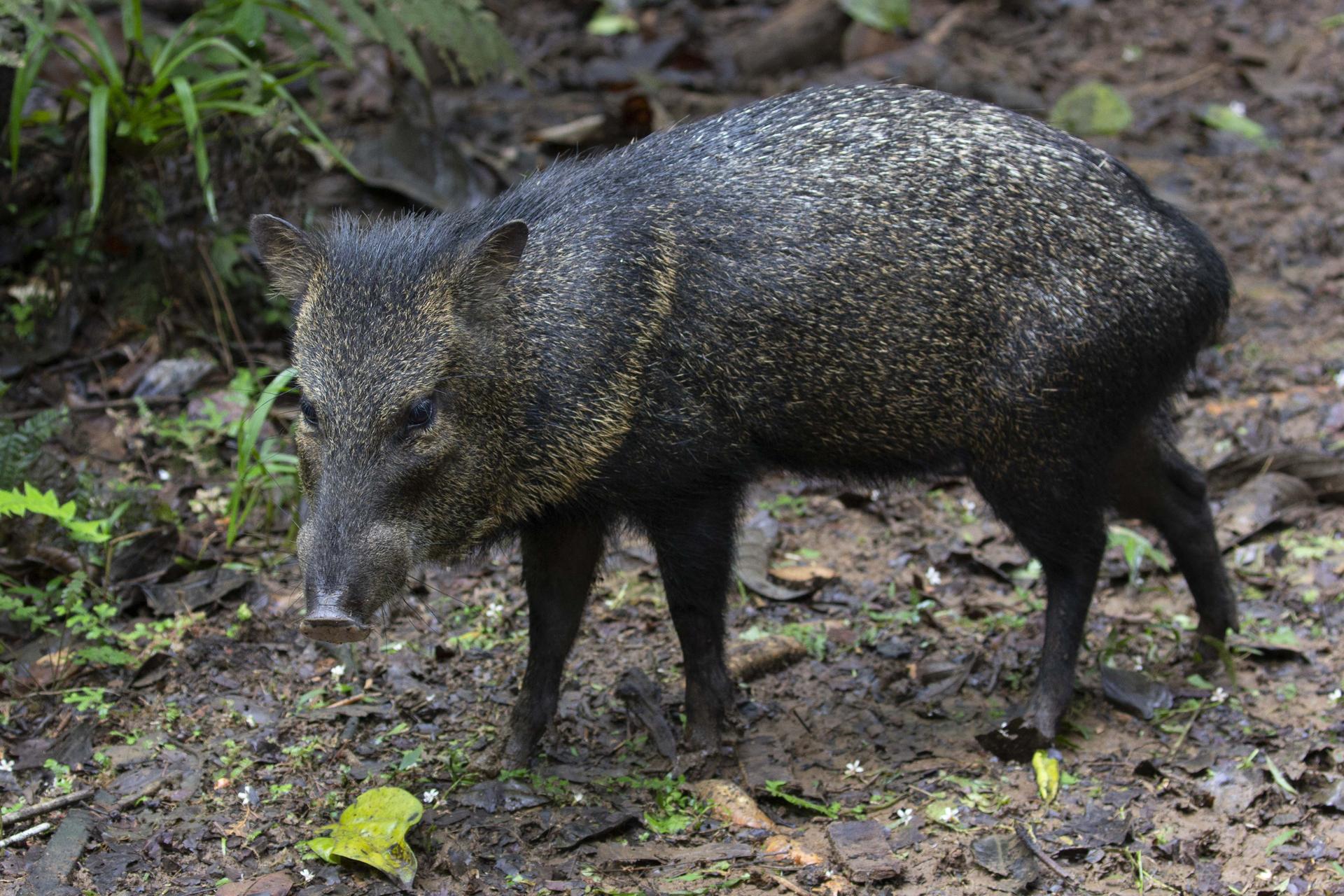
Located in the Caribbean lowlands, La Selva is OTS’ largest field station and is one of the best-known tropical research sites in the world. The station protects approximately 1,600 hectares of primary and secondary tropical rainforest. It averages 4,000 millimeters (over 13 feet) of rainfall a year. This lush environment facilitates the existence of thousands of species of plants and animals, making La Selva a great place to see all kinds of wildlife, including toucans, monkeys, ocelots, agoutis, peccaries, and the endangered green macaw. Two major rivers, the Sarapiquí and the Puerto Viejo border la Selva. These rivers form part of the San Juan River Basin. La Selva is connected via a biological corridor with Braulio Carrillo National Park, which contains 46,000 hectares of forestland and ascends almost 3,000 meters in elevation to Volcán Barva, which overlooks the town of Heredia in the Central Valley.
La Selva has an extensive trail system, and lots of lab space, and is, in general, a pretty busy place. (The station can sleep over 100 people.) Important crops grown in the area surrounding La Selva include bananas and the heart of palm. Services available at La Selva include phone, fax, and e-mail. Showers may or may not have hot water, and students have access to laundry machines. Housing consists of small dorm rooms with up to six students each.
Please visit the station’s site for more information: https://tropicalstudies.org/portfolio/la-selva-research-station/
A tentative overview of our plan for the 6 days is shown below.
Day 1
Welcome and introductions
Each student will give a 5-minute introduction
Phenotypic variation in natural populations (Chap 2) [FWA]
Common garden experiments [SNA]
Chromosomal variation & pangenomes (Section 3.1) [FWA]
Genetic variation (Chap 3) [FWA]
Population genomics (Chap 4) [SNA]
Day 2
Hardy-Weinberg principle (Chap 5) [FWA]
Genetic drift (Chap 6) [FWA]
Effective population size (Chap 7) and the coalescent (Sections 7.8 & A10) [FWA]
We would like to spend this afternoon on a short field trip in the La Selva area. This will provide
the opportunity for the students and instructors to get to know each other in an informal setting.
Day 3
Natural selection and adaptation (Chap 8) [SNA]
Population subdivision (Chap 9) [FWA]
STRUCTURE software [FWA]
Multiple loci (Chap 10) [FWA]
We will spend this afternoon on the first session on data analyses. [MK]
Day 4
Follow-up on data analyses section [MK]
Quantitative genetics (Chap 11) [SNA]
Inbreeding (Chap 17) [FWA & MK]
We would like to spend this afternoon on a field trip.
Day 5
Hybridization (Chap 13) [FWA]
Landscape genetics (Chap 19) [SNA]
Units of conservation (Chap 20) [FWA & SNA]
Discuss progress on data analyses [MK]
Climate change (Chap 16) [SNA]
Demography and extinction (Chap 18) [FWA & MK]
Day 6
Presentation of data analyses groups
Conservation genetics in practice (Chap 24) [All]
General discussion
Sites Visited
La Selva Research Station
Located in the Caribbean lowlands, La Selva is OTS’ largest field station and is one of the best-known tropical research sites in the world. The station protects approximately 1,600 hectares of primary and secondary tropical rainforest. It averages 4,000 millimeters (over 13 feet) of rainfall a year. This lush environment facilitates the existence of thousands of species of plants and animals, making La Selva a great place to see all kinds of wildlife, including toucans, monkeys, ocelots, agoutis, peccaries, and the endangered green macaw. Two major rivers, the Sarapiquí and the Puerto Viejo border la Selva. These rivers form part of the San Juan River Basin. La Selva is connected via a biological corridor with Braulio Carrillo National Park, which contains 46,000 hectares of forestland and ascends almost 3,000 meters in elevation to Volcán Barva, which overlooks the town of Heredia in the Central Valley.
La Selva has an extensive trail system, and lots of lab space, and is, in general, a pretty busy place. (The station can sleep over 100 people.) Important crops grown in the area surrounding La Selva include bananas and the heart of palm. Services available at La Selva include phone, fax, and e-mail. Showers may or may not have hot water, and students have access to laundry machines. Housing consists of small dorm rooms with up to six students each.
Please visit the station’s site for more information: https://tropicalstudies.org/portfolio/la-selva-research-station/
Tuition
Participants are expected to pay 2700 USD it includes transcript issuing, materials, meals and lodging
Transportation to and from the station is provided, the transfer will depart from OTS headquarters in San José. The night prior (8 Nov) to the course and the night right after the course are not provided (16 Nov)
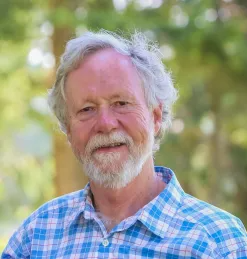 Fred Allendorf, Ph.D.
Regents Professor Emeritus at the University of Montana
His primary research interests are conservation and population genetics, having published over 200 articles on the population genetics and conservation of fish, amphibians, mammals, invertebrates, and plants. He has taught conservation genetics workshops in the US, Australia, South Africa, Costa Rica, and New Zealand.
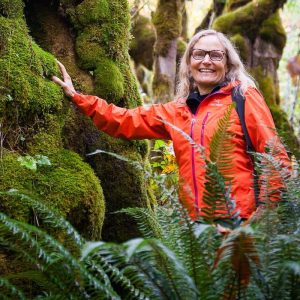 Sally Aitken, Ph.D.
University of British Columbia
Her lab seeks to understand the population genetic structure of temperate and boreal trees, and the evolutionary dynamics that have resulted in that structure. We are particularly interested in the extent of local adaptation to climate in tree populations, the phenotypic traits and genes involved in local adaptation, and the capacity of those populations to adapt to new climates. To investigate this question we are using genomic tools as well as phenotypic data from common gardens and controlled environment experiments. We also infer the phylogeography, demographic history, and levels of gene flow of these populations using a variety of selectively neutral genetic markers. Finally, our work is applied to guide genetic conservation and management strategies for our forests. Our research is funded through Genome Canada, Genome BC, the Forest Genetics Council of BC, Alberta Innovates Bio Solutions, the Natural Science and Engineering Research Council of Canada (NSERC).
Marty kardos, PhD.
Colorado State University
Marty Kardos received his PhD in Evolutionary Biology from the University of Montana in 2013. He was a post-doctoral researcher at Uppsala University in Sweden and the University of Montana. He was a career research geneticist for five years at the National Marine Fisheries Service in Seattle. He is currently a Research Scientist at Colorado State University. Marty is interested in population genetics and applications of evolutionary theory and genomic data to solve problems in conservation.
Marty´s Work
Housing & Meals
It is important to recognize that the OTS courses differs from your typical day-to-day living and especially on the fact that they are mostly intensive field courses. Though you may have prior experience of living with one or two roommates on campus, during the course you will be interacting closely with 10–15 others.
We have selected the research cabins for the students attending this course, in each cabin you will find from 3-5 different rooms, one to two private bathrooms and a common area. You will be sharing the room with 1 other person. We planned it like this, because we know it is important to have a more private environment after long days of field work and socializing.
During the day you will be immersed on lectures, workshops, hikes and constantly sharing common areas with your classmates, this means communication and respect will be crucial. We also need to have sincere respect for one another, regardless of different opinions and lifestyles. This includes respect for privacy, respect for rules and regulations, and even respect for the fact that unpredictability is an inherent feature of field-based programs such as ours. Indeed, next to communication and cooperation, flexibility and a good sense of humor are the most important characteristics of a successful student in our program.
Passport & Visa Information
You must have a valid passport to travel to Costa Rica. It is important that the passport does not expire within six months of entering Costa Rica. If you are NOT a citizen of a North American or European country, you will probably need a special visa to get into Costa Rica. We recommend that you contact your respective consulate or embassy services to determine if you need a visa to travel to Costa Rica. It is important to consider the requirements to get a visa approved before you apply for one of our courses. If you are accepted into one of our courses, we will provide any information necessary, within reason, to help with the visa application. Please keep in mind that the visa application process can take several months, depending on the country of issue. For more information on this topic please visit this website.
U.S. citizens entering Costa Rica are automatically granted a 90-day tourist visa. Students planning to stay in Costa Rica after the program end date need to take this into account.
Review the requisites about traveling and entering Costa Rica in the following links:
Entry requirements: https://www.visitcostarica.com/en/costa-rica/planning-your-trip/entry-requirements
US Embassy information: https://cr.usembassy.gov/covid-19-information/
Please consult OTS if you have any questions.